Walk into any high-end furniture showroom and you’ll find coffee tables priced anywhere from $300 to well over $1,000. But here’s the thing most people don’t realize: the “expensive look” isn’t about the price tag at all. It comes down to a handful of design choices — clean proportions, the right finish, quality-looking hardware — that anyone with basic tools can replicate at home.
This guide walks through DIY coffee table ideas across the most popular styles, explains exactly what makes each one look high-end, and gives you a realistic starting point whether you’re a first-time builder or already comfortable with a saw and some sandpaper.
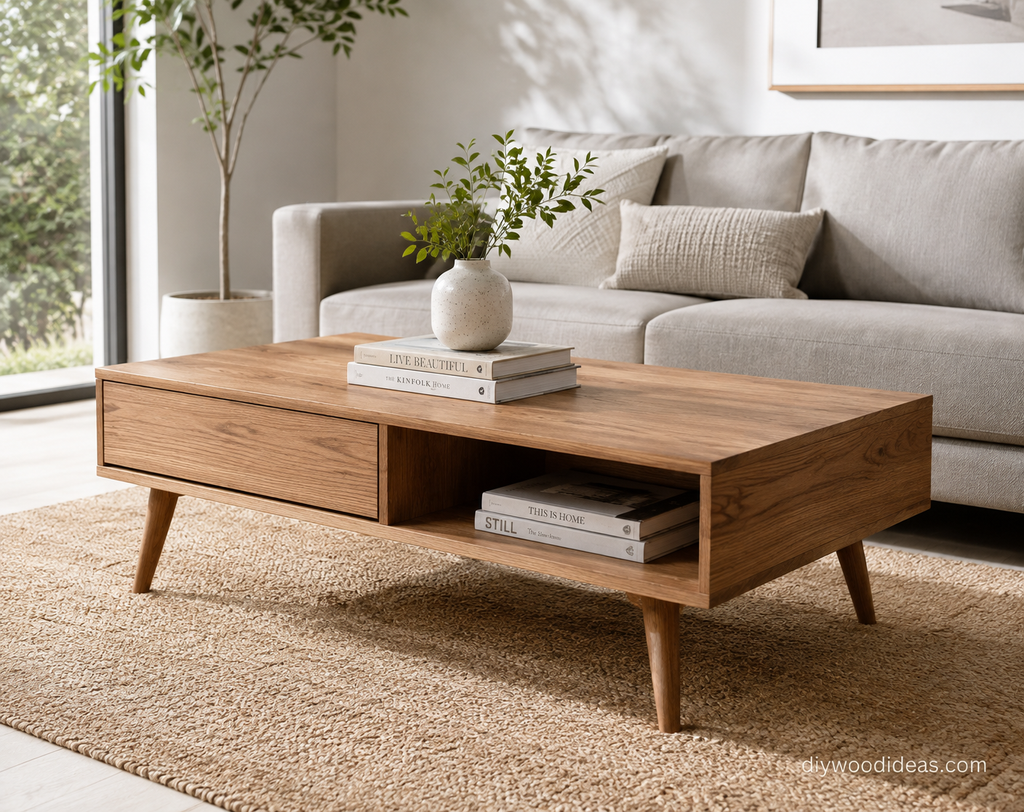
What Actually Makes a Coffee Table Look Expensive?
Before diving into styles, it helps to understand the few details that separate a table that looks like a $50 box from one that looks like a $500 statement piece.
Wood Grain and Finish Quality
A well-sanded surface with a smooth, even stain does more for perceived value than almost anything else. Rushed sanding or a blotchy stain job is the fastest way to make even a well-built table look cheap.
Clean Proportions and Simple Lines
Expensive-looking furniture tends to favor simple, confident lines over busy, overly detailed designs. A slightly thicker tabletop and evenly spaced legs read as “solid” and “considered” rather than thrown together.
Hardware and Leg Details
Metal hairpin legs, black matte hardware, or tapered wood legs instantly shift the look from basic to designer. Small details like this are often what separates a boutique-store table from a big-box version.
Tips Box: 3 Finishing Tricks That Instantly Upgrade a “Plain” Build
- Sand through at least three grits (medium, fine, extra-fine) before staining — this alone changes the entire look.
- Apply stain in thin, even coats rather than one heavy coat to avoid blotching.
- Finish with a matte or satin topcoat instead of high-gloss — matte reads as “expensive,” gloss often reads as “cheap laminate.”
Modern & Minimalist Coffee Table Ideas
Modern coffee tables lean on simple geometric shapes, clean edges, and often a mix of wood with black metal accents. This style photographs beautifully and pairs with almost any living room.
- A rectangular tabletop with thin tapered wood legs and no visible screws
- A two-tier design with a lower open shelf for books or baskets
- A round tabletop paired with a black metal hairpin base for contrast
[Insert Pinterest Image: Minimalist round coffee table with metal hairpin legs]
Want to build this look yourself? Learn how to build a modern coffee table step by step → with plans that walk you through clean, professional-looking joints and proportions.
Rustic & Farmhouse Coffee Table Ideas
Rustic-style tables lean into visible wood grain, warm stain tones, and slightly chunkier proportions — think exposed joinery and a “built by hand” character that buyers specifically seek out.
- A thick solid-wood top with an X-shaped leg base
- A trestle-style table with visible joinery details
- A reclaimed-look design with a distressed, weathered finish
[Insert Pinterest Image: Rustic farmhouse coffee table with X-frame legs]
DIY this project with step-by-step plans — see exactly how it’s built → and get that hand-crafted farmhouse look without the farmhouse-store price.
Industrial-Style Coffee Table Ideas
Industrial tables combine raw wood with black metal framing, creating a striking contrast that feels both rugged and refined — a favorite in loft-style and open-concept living rooms.
- A thick wood slab top on a welded (or bolted) black metal pipe frame
- A wood-and-metal design with a lower metal shelf for storage
- A live-edge wood top paired with simple angular metal legs
[Insert Pinterest Image: Industrial coffee table with black metal pipe legs]
Love this idea? Get plans to build a table like this yourself → and combine wood and metal with confidence, even on your first build.
Mid-Century Modern Coffee Table Ideas
Mid-century style is defined by warm wood tones, gently tapered legs, and organic shapes — a timeless look that consistently sells well because it fits nearly any home style.
- An oval or kidney-shaped tabletop with slim angled legs
- A walnut-toned rectangular table with rounded corners
- A two-tone design combining a light wood top with darker tapered legs
[Insert Pinterest Image: Mid-century modern coffee table with tapered wood legs]
Want to build this yourself? Learn how to build projects like this → and bring a timeless mid-century piece into your own living room.
What You Need to Build Your Own Coffee Table
You don’t need a professional workshop to build any of the styles above — just the right basics.
Basic Tools Required
- A circular saw or table saw for straight cuts
- A drill/driver
- Wood glue and clamps
- Sandpaper (medium, fine, extra-fine grit) or an orbital sander
- Wood stain and a protective topcoat (matte or satin)
Best Wood Choices for a Premium Look
| Wood Type | Cost | Look/Finish Level | Best Style Match |
|---|---|---|---|
| Pine | Low | Casual, warm | Farmhouse, rustic |
| Oak | Medium | Rich grain, sturdy | Farmhouse, industrial |
| Walnut | High | Deep, luxurious tone | Mid-century, modern |
| Plywood (edge-banded) | Low–Medium | Clean, minimal | Modern, minimalist |
| Reclaimed Wood | Varies | Character-rich, textured | Rustic, industrial |
How Much Does It Cost to DIY a Luxury-Look Coffee Table?
| Table Style | Store-Bought Price | DIY Build Cost | You Save |
|---|---|---|---|
| Modern minimalist | $400–$600 | $70–$120 | $330–$480 |
| Rustic farmhouse | $350–$550 | $60–$100 | $290–$450 |
| Industrial wood + metal | $500–$800 | $90–$150 | $410–$650 |
| Mid-century modern | $450–$700 | $80–$130 | $370–$570 |
Expert Advice Box: Where to Splurge vs. Where to Save Splurge on the tabletop wood — it’s the most visible surface and where quality is most noticeable. Save on the base or legs, especially if you’re using simple metal hairpin legs, which are affordable but still read as high-end.
Common Mistakes That Make a DIY Coffee Table Look Cheap
- Wrong proportions — a top that’s too thin relative to the legs looks flimsy, not sleek
- Poor sanding or finish — skipping grits or rushing the stain job shows immediately
- Mismatched hardware — mixing metal tones (like silver screws with black legs) breaks the polished look
- Rushing the stain job — uneven coats create blotchy patches that are hard to fix afterward
- Skipping proven plans — guessing at proportions often leads to a wobbly or awkwardly sized table
FAQ
What’s the cheapest way to build a coffee table that looks expensive? Using plywood or pine with edge-banding for the top, paired with affordable metal hairpin legs, gives a clean, modern look for a fraction of store-bought prices.
What wood looks the most luxurious for a coffee table? Walnut is widely considered the most premium-looking option due to its deep, rich tone, though a well-finished oak table can achieve a similarly upscale look at a lower cost.
Can a beginner build a nice-looking coffee table? Yes. Simple rectangular or round designs with straightforward joinery are very achievable for beginners, especially when following step-by-step plans.
How long does it take to build a coffee table? Most simple designs can be built in a weekend, including cutting, assembly, sanding, and one coat of finish — with additional drying time for stain and topcoat.
What size should a DIY coffee table be? A standard coffee table is typically around 18 inches tall and sized to leave 14–18 inches of space between it and your sofa for comfortable movement.
Final Thoughts
The gap between a $500 showroom coffee table and a $90 DIY build isn’t skill or material cost — it’s a handful of design decisions anyone can learn. Pick a style that fits your space, follow a clean proportion guide, and take your time on the finish.
